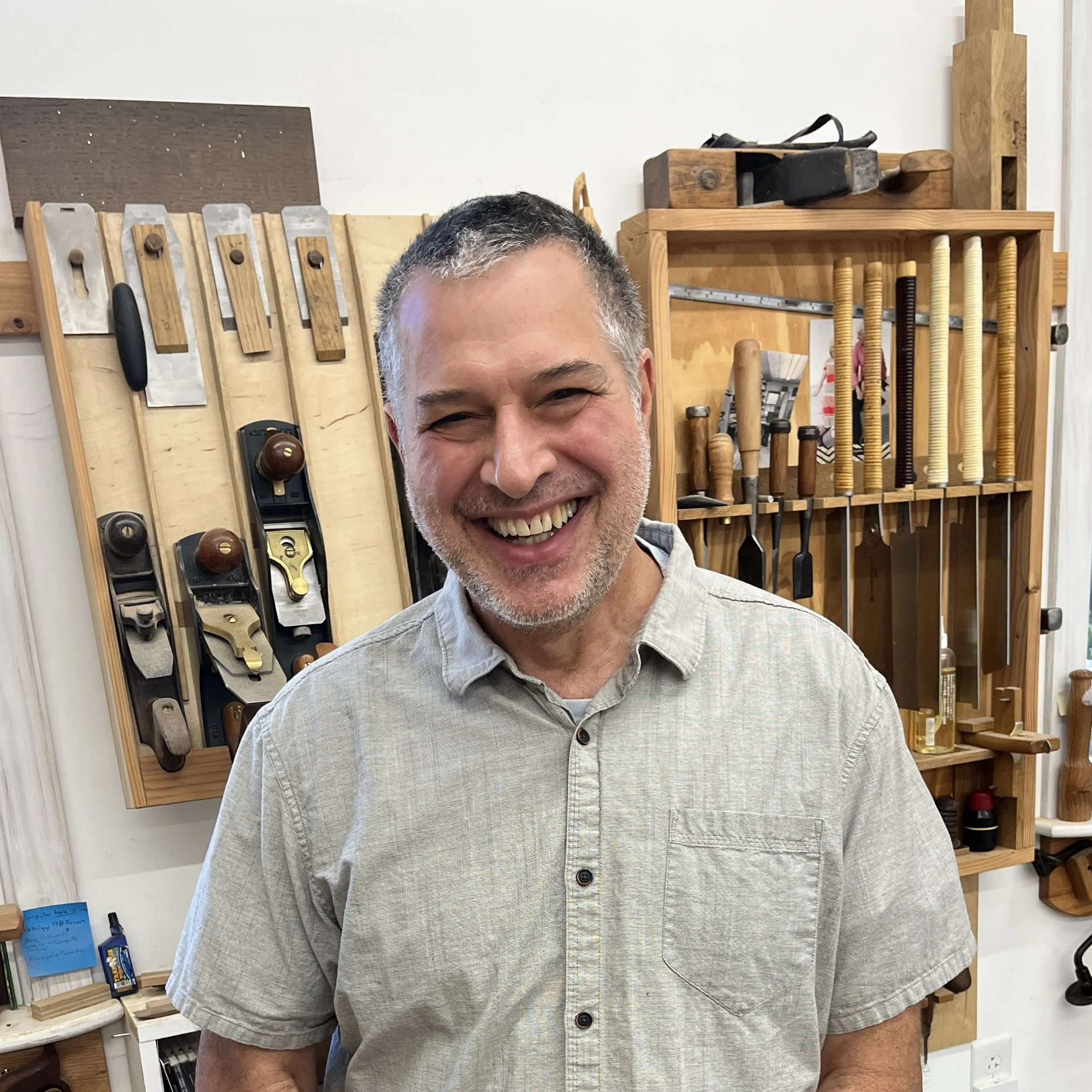
Evangelos Courpas is an artist and woodworker living and working in Central, South Carolina. His early formative experiences, beginning at age 13, centered on working green wood to make post and rung chairs. This included felling trees like oaks and hickories; splitting the logs into quarter and eighth sections; then crosscutting and riving those sections into rough stock for posts, rungs, and slats. The finishing of these parts was done with a drawknife and spokeshave on a shaving horse. In conjunction with this work, Evangelos learned the joinery and necessary moisture content for each part in the assembly of the chair.
On this foundation, he added traditional joinery and casework skills, using seasoned lumber; building Shaker-inspired beds, tables, and chests of drawers while working for other furniture makers and as commissions for his own business.
His experiences as a craftsperson and builder are interwoven with his formal education in college and graduate school. At Oberlin College and Alfred University, Evangelos studied fine art, exploring many processes and media including photography, sculpture, sound, and video; eventually leading to a dual approach to his woodworking through craft and art. He continues to believe that learning through handcraft and artistic expression are both important to the human experience.
His work has been exhibited at ArtFields in Lake City, SC; Materials: Hard + Soft in Denton, TX; and this past summer with a solo exhibition at the Jerry Drown Wood Studio Gallery at the Arrowmont School of Arts and Crafts in Gatlinburg, Tennessee. Evangelos will be teaching a one-week course making small sculptures this summer at Arrowmont, entitled: Arti(s)fact, Wood is Fiction: Turning and Stacking Stories, based on his Ndoodem Series artwork.
Artist Statement
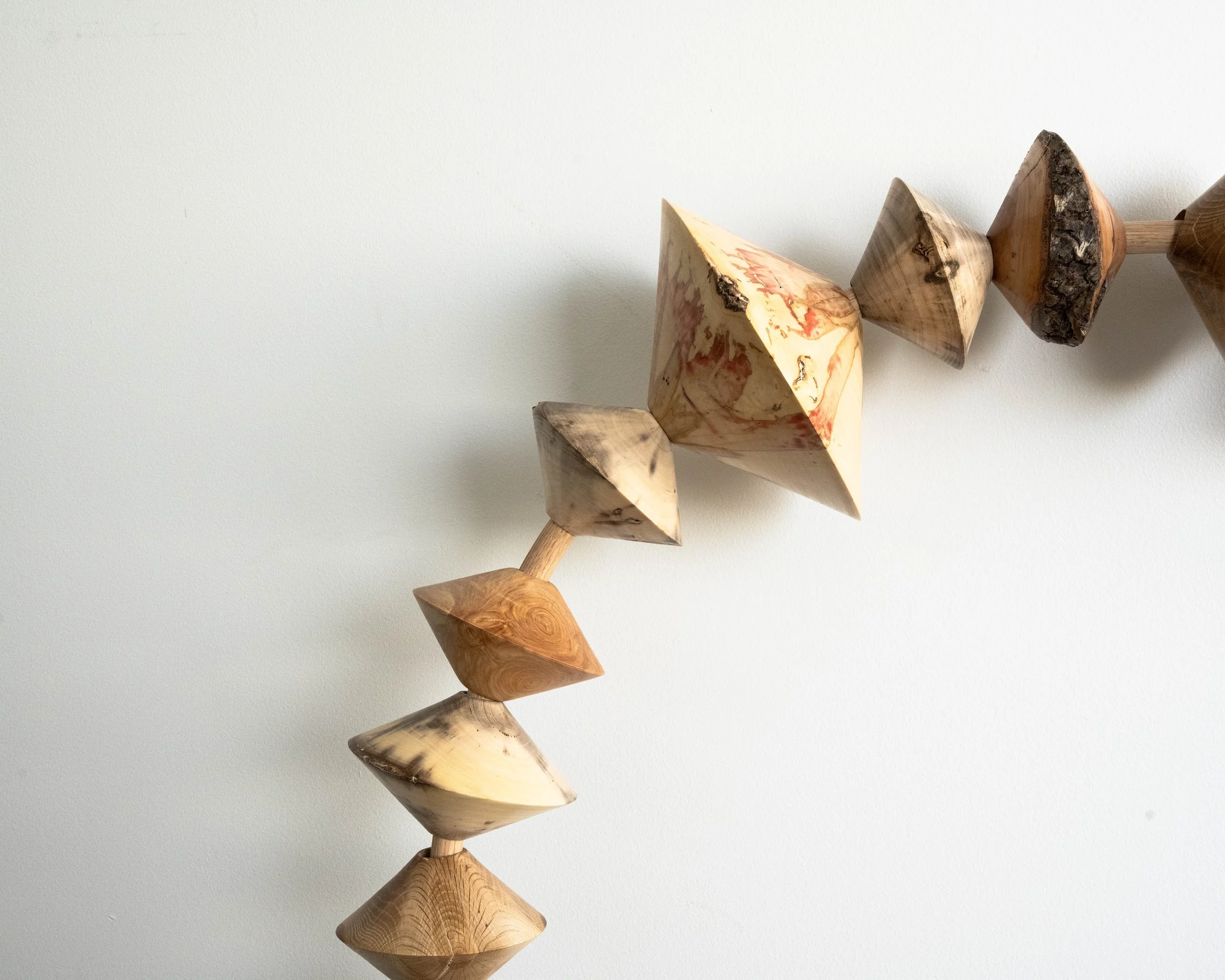
As an artist and craftsperson, I incorporate green woodworking skills with other traditional skills of joinery, wood turning, and casework for my current body of work, the Abacus Series. These pieces reflect many of the structural elements of a typical abacus with its frame, rods, counting beads, and a bar to separate the upper and lower beads. While an abacus requires this structural hierarchy in order to function mathematically, altering this structure offers me an opportunity to play on those structural hierarchies. In my counting frames, a frame can be open or closed; reduced to just a base; or a constrained container, each a structure for a collage of beads.
The work begins with selecting and laying out the frame material, informing its scale and tenor. Next the stock for the rods is chosen from sets of shaved sticks of various sizes. I place the rods across the frame to determine their order and placement. This is enough to determine the joinery for that frame and how to secure the rods. Beads are turned en masse, selecting pieces and types of wood that best relate to the feeling of the abacus and its title.
Turning the beads for the work has become an exploration of the incredibly diverse qualities of wood. Trees, like humans, adapt or succumb to stresses, disease, and their environmental conditions. My turnings can reveal a specific branching structure in a limb or the wood around what was an insect infestation. The beads can become beings or personas to be dressed up or down, in line with or in resistance to structural hierarchies of the frame. Each turned wood bead brings its own coloration and pattern to be painted over, clothed, cloaked or armored, smoothed or left rough, oiled, waxed, or left bare.